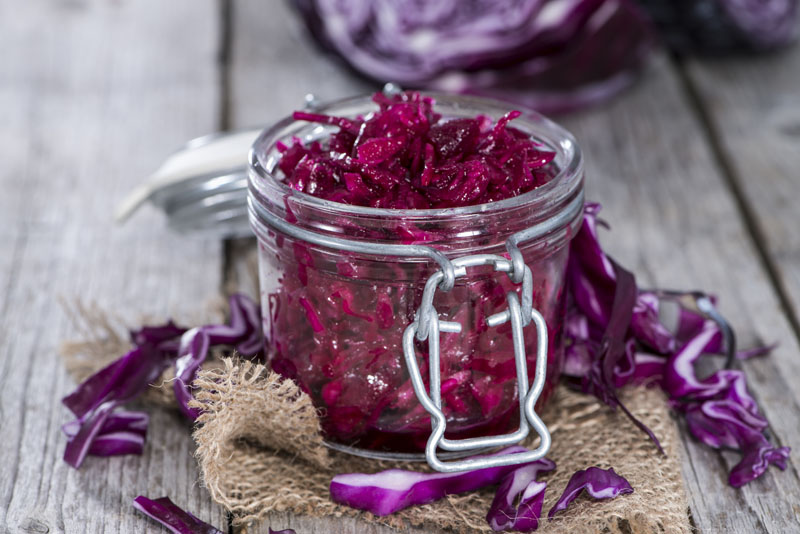
Fermenting food is one of man’s oldest and safest preserving methods. We have been doing this for thousands of years, and the bacteria used in fermentation are an integral part of our digestive system. Then modern technology came along, and fermenting went out of fashion as more easily prepared,
As we ate less and less fermented food, more and more people started experiencing problems such as Inflammatory Bowel Disease, Eczema, and Irritable Bowel Syndrome, to name a few. With our newfound understanding of the role of bacteria in our health, eating prebiotic and probiotic foods has become a key part of maintaining a healthy diet.
You can now purchase several different ferments, such as sauerkraut and kimchi, in health food stores that contain live bacteria, which are great for you and delicious. The problem is that they can be very expensive, and you have to buy another glass jar each time you get one.
The good news is that not only are fermented foods good for you and taste great, but they are also easy to make! Save your money and the new glass jar every time you get one; make your own instead. Here is my recipe, along with a step-by-step guide to making a simple fermented red cabbage.
Ingredients:
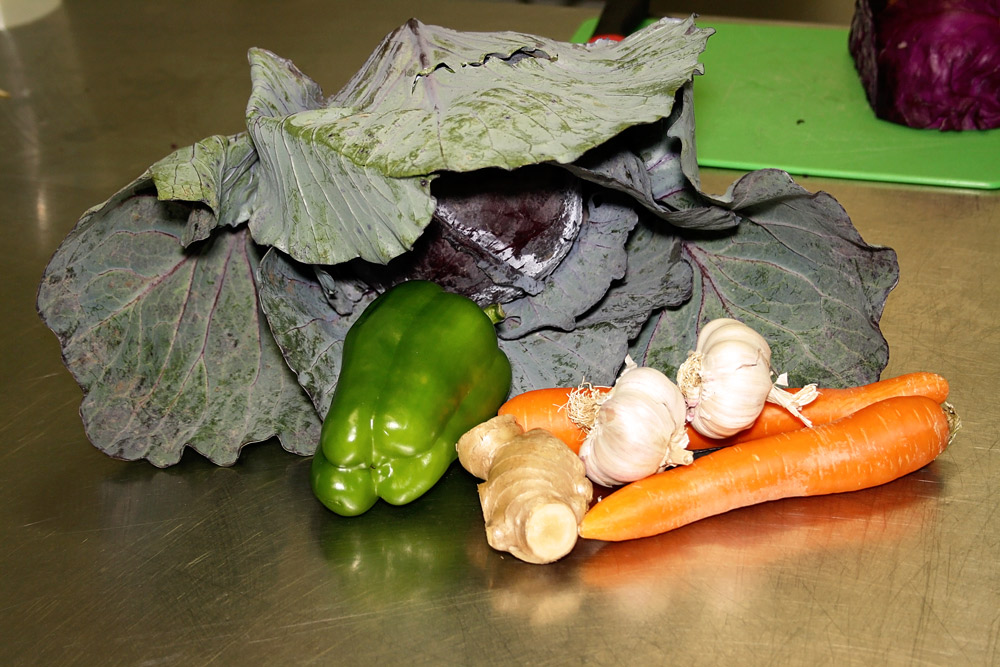
- ½ a small red cabbage
- One carrot
- One green capsicum
- Two cm piece of ginger
- Four to five cloves of Australian garlic
- Non-chlorinated water
- Vegetable fermenting culture (starter)
Equipment:
- Cutting board
- A sharp knife
- Micro-plane
- Pot to mix your vegetables in
- Fermentation system
- Cup
Instructions:
- Chop up your cabbage, carrot, and capsicum into small to medium-sized pieces and place them in a mixing pot.
- Finely mince the garlic and add it to the mixture.
- Using a microplane, grate the unpeeled ginger and add it to the pot. Keeping the peel adds extra fibre, which is good for you.
- Toss all the vegetables together, then place them in your fermenting pail.
- Place your grate on top to hold the vegetables down.
- Mix your culture with some water, then add it to the fermenting pail. Top up with more water until all of the vegetables are covered. Remember, everything submerged in the fermenting liquid will ferment, and everything above the liquid will spoil.
- Place your lid with the airlock onto the pale and seal. Add water to your airlock and set aside to ferment. The fermentation period will vary from 7 to 10 days, depending on the time of year and temperature. In warmer months, fermentation occurs more quickly.
This is a great place to start your fermenting journey. Remember, the longer you ferment, the stronger the flavour, so start at a level you like and go from there. When you learn to do it yourself, you are taking back control. Doing your own fermenting is good for your gut and
As always, live well.
Valerie